
You Do Not Need a Badge Scanner to Win at Trade Shows. Here's Why


Picture the typical trade show result. A team scans 400 badges over three days, feels great about the number, gets home, sends a dozen follow-ups, gets two replies, and closes nothing. The badge scanner did its job perfectly. It captured 400 names. The problem is that 400 names are not 400 leads, and somewhere between the scan and the sale, almost everything leaked away.
The badge scanner has been the default at trade shows for years, mostly out of habit. It is worth asking whether it actually helps you win, or whether it just makes you feel productive while the real work goes undone. Here is the case against leaning on it, and what to do instead.
A badge scan captures the wrong thing
When you scan a badge, you get whatever the event organiser decided to put on it. Usually that is a name, a company, and a job title. That is identity, not intent. It tells you who walked past, not why they stopped, what they cared about, or what you agreed to do next.
And those missing pieces are the entire game. Across the events industry, the leads that convert are the ones where someone captured four things: how interested the person was, the specific problem they raised, their timeline, and the agreed next step. A badge scan captures none of them. So you arrive home with a list of strangers wearing the right job titles, and no idea what to say to any of them.
The scanner makes follow-up generic, which makes it fail
Because the scan holds no context, the follow-up you can write from it is hollow. "Great to meet you at the show" is the only honest message a bare contact allows. The recipient had fifty conversations that week. Your generic note looks exactly like the other forty-nine, so it gets deleted.
This is why so much trade show ROI vanishes. It is not that the leads were bad. It is that the capture method threw away the one thing that makes follow-up land: the memory of the actual conversation. Up to 80 percent of trade show leads never get any follow-up at all, and a big share of the ones that do get a message so generic it may as well not have been sent.
You usually rent it, and it traps you at the booth
There is a practical problem too. Badge scanners are often rented per event, an extra few hundred dollars on top of everything else, and the hardware only works at that one show with that one organiser's system. The moment you step off the show floor, into the hallway, the coffee line, the dinner where the real conversations happen, the scanner is useless. Some of your best leads are never standing at your booth with a badge to scan.
What to do instead: capture the conversation
The alternative is simple. Stop trying to capture identity faster and start capturing the conversation. The way to do that is to talk, not scan.
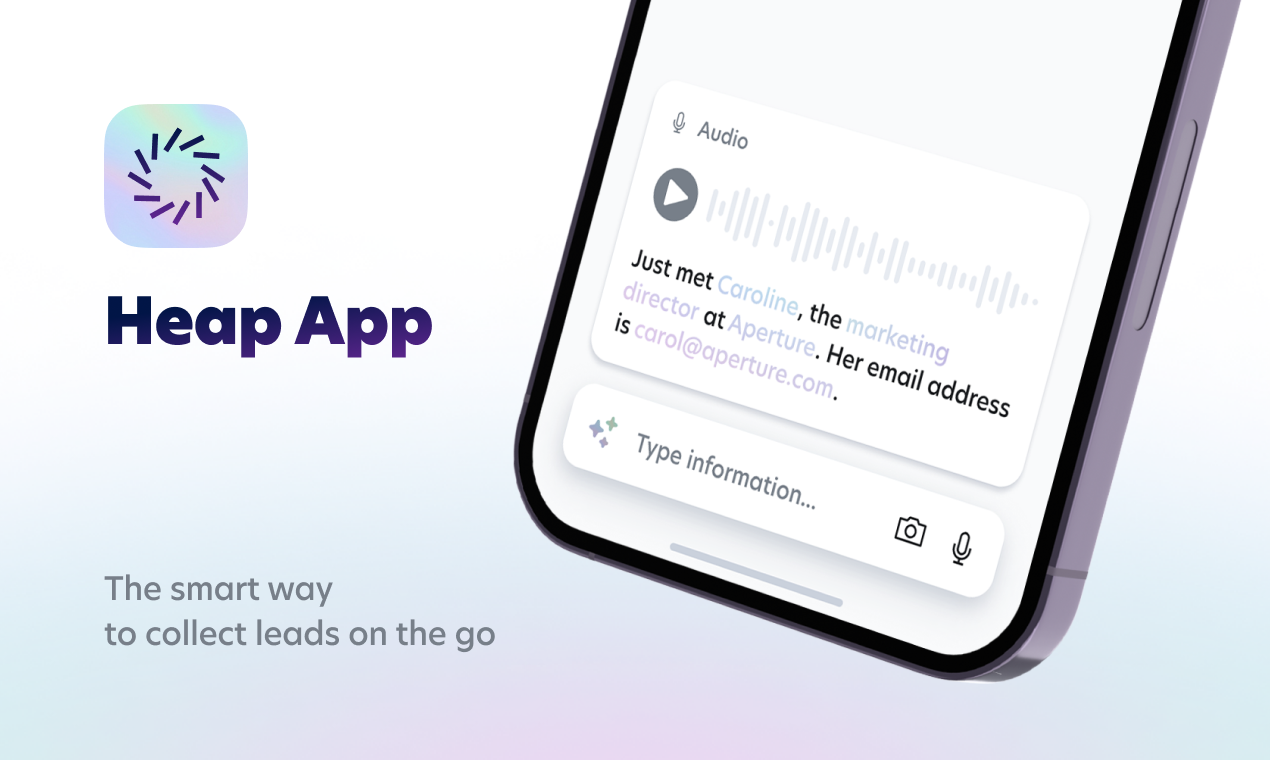
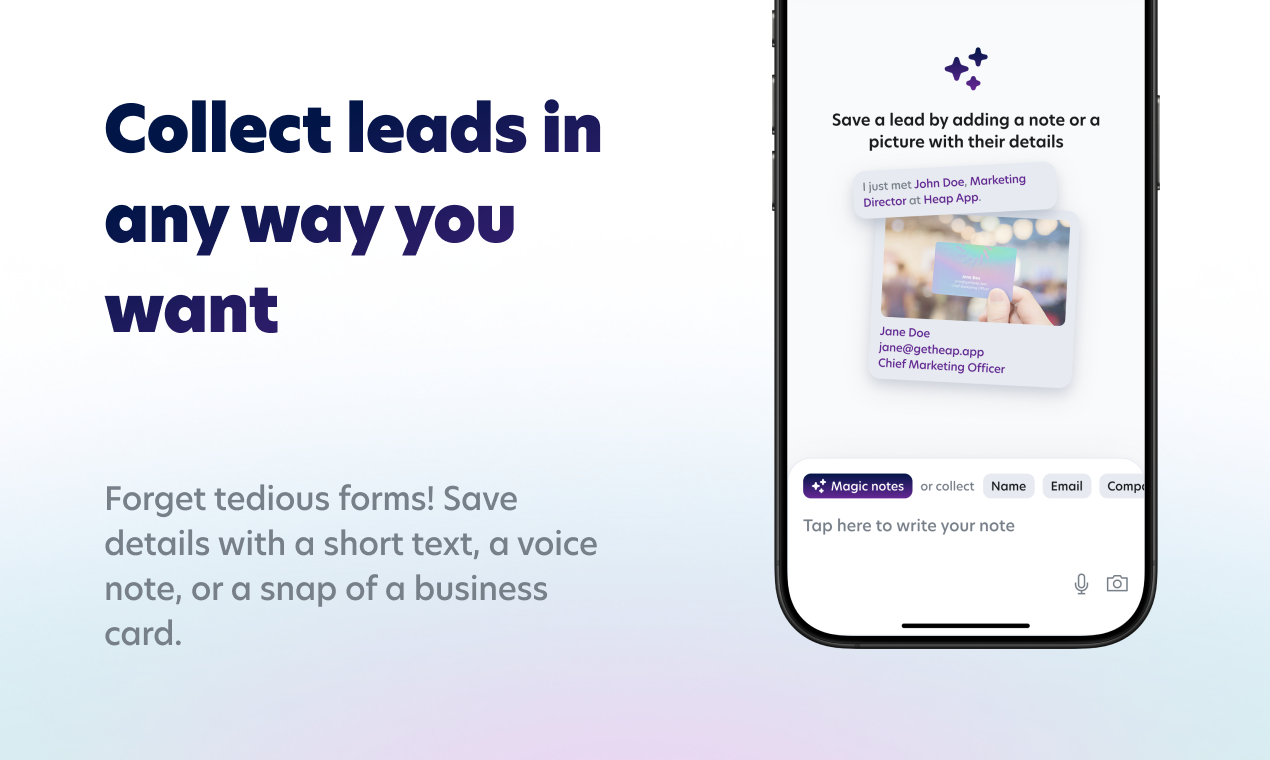
After a conversation, you describe what happened in plain language: "Just spoke to Tom Becker, operations director at Cedar and Stone Logistics. He is dealing with constant overtime because his scheduling is manual, wants a demo next week, and is hoping to sort it before peak season. Email [email protected]." That single description holds the name, the company, the title, the problem, the timeline, and the next step. Everything the badge scan missed.
This is what Heap is built to do. You say what happened and it fills in the structured fields, finds the person's LinkedIn so you can connect on the spot, drafts a follow-up grounded in the overtime problem Tom mentioned, and syncs the record to your CRM. Because you are describing a conversation rather than scanning a badge, the context that makes follow-up work comes along automatically. And because there is no hardware and no badge required, the same capture works in the hallway, at the dinner, or in the taxi afterwards.
The honest part
Heap does not integrate with event badge scanning systems. It can read the printed text on a badge the same way it reads a business card, but it does not pull live data from the organiser's badge system. If that specific capability is the thing you cannot live without, a traditional scanner-first tool will do it and Heap will not.
But it is worth asking what that capability really buys you. Live badge data gives you a name and a title faster. It does not give you the conversation, the intent, or the reason to follow up. For most teams, the badge scan was never the valuable part. The conversation was. Once you see it that way, not depending on a scanner stops feeling like a limitation and starts looking like the point.
Frequently asked questions
Do I really not need a badge scanner at a trade show? For most teams, no. A badge scan captures basic contact fields but none of the context that drives conversions. Capturing the conversation itself, by talking rather than scanning, gives you richer leads and better follow-up.
What is wrong with badge scanning? Nothing, except that it captures identity rather than intent. It tells you who someone is, not why they stopped or what they need, and it usually requires rented hardware that only works at that one event.
How do I capture leads without a scanner? Use a tool that lets you describe the conversation in plain language and structures it for you, or capture qualifying notes on your phone. The goal is to record intent, the problem raised, the timeline, and the next step.
What about leads I meet away from the booth? That is exactly where scanners fail and conversational capture wins. Because it needs no badge or hardware, you can capture a hallway or dinner conversation the same way you capture one at the stand.
The bottom line
The badge scanner is good at one thing: collecting names quickly. But names do not close deals, conversations do. If you want to come home from a trade show with pipeline instead of a long list of strangers, stop optimising for how fast you can scan and start capturing what was actually said. Talk, do not scan, and follow up while it is fresh. That is how the booths that win actually win.


